
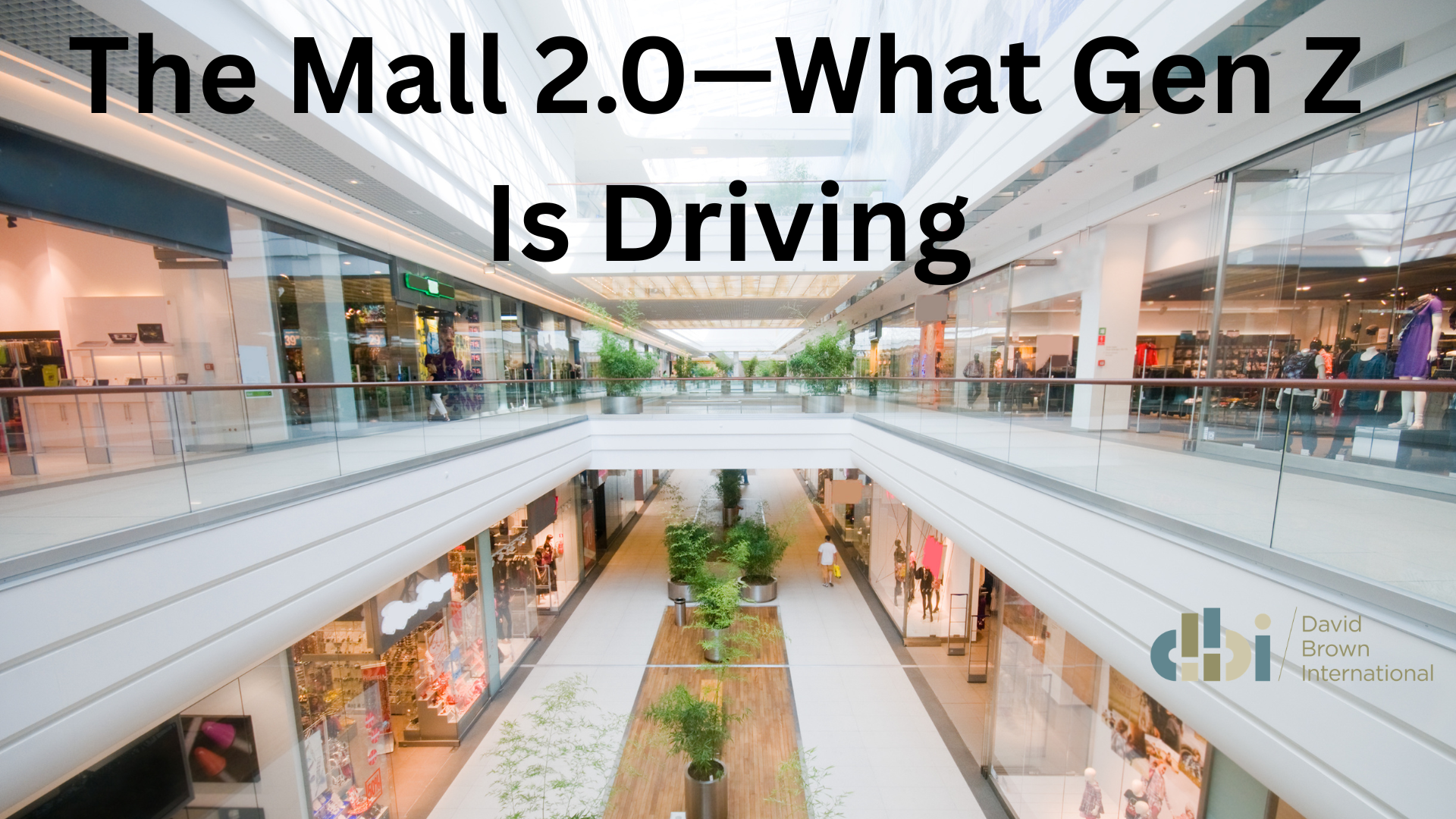
For a decade, the American mall has been treated like a cultural fossil—an oversized, inward-facing relic undone by Amazon, overexpansion, and the slow collapse of department store anchors.
But change is afoot.
The mall isn’t dead. It’s being reprogrammed. And at the center of that transformation is Gen Z. Not just as shoppers—but as spatial critics, cultural drivers, and unintentional architects of a new kind of retail environment.
Who Is Reviving the Mall?
The revival of the mall is often credited to developers and brands—but that misses the deeper force shaping it: a generation that values space differently. Gen Z is a spatial consumer.
Gen Z doesn’t just shop—they occupy space:
- They linger
- They document
- They gather in groups
- They treat environments as social backdrops
Unlike previous generations, their relationship to retail is not purely transactional. It’s performative, social, and spatially aware. This has forced developers and designers to rethink what a mall is for.
Developers Adapting to Behavior
Firms like Simon and Brookfield are still leading redevelopment—but their strategies are increasingly shaped by Gen Z preferences. The spaces are more open, more flexible, and more spaced, and have more visual identity and design differentiation. They are being developed for uses that reward time spent, not just money spent.
This has, in turn, influenced how brands design their spaces. They are also designing for presence, not just sales. For example, Nike stores feel like training facilities, and Apple stores are technological playrooms.
The store is no longer the endpoint—it’s a stage.
Why Gen Z Is Bringing the Mall Back
At first glance, it seems contradictory. This is the most digital-native generation in history. Why would they return to physical retail? It is simple human nature. Gen Z lacks—and actively seeks—a physical third space. And Gen Z has grown up with a complete lack of social spaces.
- Suburbs without walkable centers
- Cities with expensive or privatized public spaces
- A digital ecosystem that replaces—but doesn’t replicate—presence
The mall, even in its outdated form, offers something as a social space. It is climate-controlled, free to enter, safe, and abundant.
The aesthetics are a hindrance. Gen Z is very aesthetically aware and spaces that feel generic or dated are quickly rejected. This has pushed mall design away from uniformity toward distinct, curated atmospheres. Priorities in the Mall 2.0 are:
- Food
- Experiences
- Events
- Wellness
- Social
- Time-based
- Architecturally expressive
The Architectural Shift: Designing for Gen Z
The most profound changes in the mall are spatial, and they align almost perfectly with Gen Z behavior. From Corridors to Hangout Spaces, the traditional mall corridor was designed for movement. Gen Z demands places to pause. They demand lounge seating, steps, platforms, and informal gathering zones.
They look for integrated food and retail environments. Circulation is no longer the goal—occupation is. From Enclosed Boxes to Layered Environments, Gen Z prefers environments that feel:
- Open, but not exposed
- Structured, but not rigid
This has led to:
- Hybrid indoor-outdoor spaces
- Skylights and natural materials
- Visual connections between levels and uses
- Less of a container and more of a landscape
- Unique architectural moments, “Instagrammable” elements (though increasingly subtle and integrated)
What This Means for Retailers
Retail is being reshaped around how Gen Z uses space—not just how they spend money. Retail is content. Stores are now backdrops for social media, environments for discovery, and extensions of brand identity.
This has elevated the role of architecture and interior design within retail strategy. It means designing for shorter lifespans and more flexibility in space, more engagement, and spaces that are more easily reconfigured.
The Mall as Gen Z’s Urban Substitute
Perhaps the most important shift is conceptual. For Gen Z, the mall is not just a retail space—it’s a stand-in for the kind of city they want but often don’t have access to.
- Walkable
- Social
- Visually engaging
In response, architects and developers are transforming malls into:
- Mixed-use districts
- Social infrastructure
- Platforms for culture, not just commerce
The death of the mall was never about architecture—it was about a mismatch between space and behavior. Gen Z is correcting that mismatch. Not by consciously “saving” the mall, but by using space differently—and forcing the industry to respond. Through that pressure, the mall is evolving to, or back to:
- From the shopping center to the social environment
- From retail machine to cultural platform
- From static design to adaptive system
Gen Z isn’t just reviving the mall. They’re redesigning it.