

Operational Leadership for High-Performing Architecture Firms
Great design alone does not build a successful architecture firm.
Behind the creative work is an increasingly complex business involving project delivery, people, technology, financial performance, resource planning, risk, and client expectations. As firms grow, managing those demands can become a full-time leadership responsibility.
The right Chief Operating Officer brings structure to that complexity.
DBI is a boutique executive recruiting firm specializing in architecture, interior design, and the built environment. We help firms identify operational leaders who understand how to make a design business work better—without getting in the way of the creativity that makes it successful.
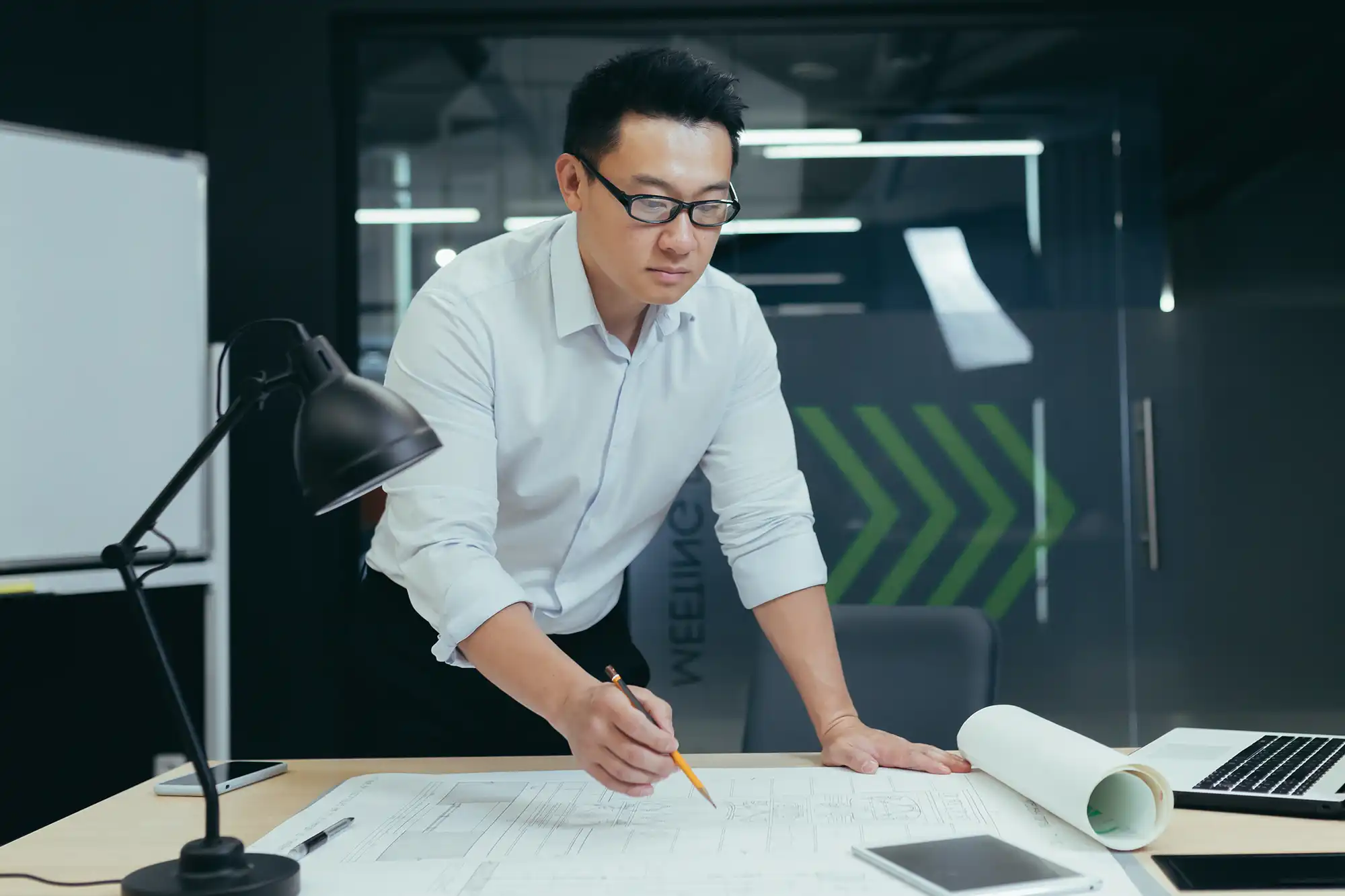
The Role of the COO in Today’s Architecture Firm
The COO can be one of the most influential leaders in a growing architecture practice.
While principals and design leaders focus on clients, projects, people, and design, the COO creates the systems and operational discipline that allow the organization to perform consistently.
Depending on the firm, a COO may be responsible for:
- Firmwide operations and performance
- Project delivery strategy
- Resource and workforce planning
- Financial and profitability improvement
- Operational technology and systems
- Process improvement and standardization
- Risk management
- Organizational structure
- Cross-studio and cross-office coordination
- Leadership development and accountability
- Change management
- Strategic planning and execution
The best COOs don’t simply make a firm more efficient. They create an operating environment that allows architects and designers to spend more time doing their best work.
When an Architecture Firm Needs a COO
Many firms reach a point where growth creates complexity faster than leadership can manage it.
A principal or managing partner may be spending too much time overseeing internal operations. Studios may be operating independently without consistent systems. Project delivery problems may be affecting profitability. Technology may exist across the organization without a clear strategy for using it.
These are often leadership problems before they are technology or process problems.
Architecture firms may consider hiring a COO when they are experiencing:
- Rapid growth or expansion
- Inconsistent project delivery
- Pressure on margins or profitability
- Resource planning challenges
- Increasing operational complexity
- Multiple offices or studios operating differently
- Technology and systems that are not well integrated
- Leadership teams stretched between clients and internal management
- Merger or acquisition integration
- Founder or principal succession
- A need to professionalize firmwide operations
DBI helps firms determine what kind of operational leader fits the organization rather than forcing every COO search into the same executive profile.
What Makes a Strong Architecture COO?
An effective COO needs operational expertise, but within an architecture firm, that is only part of the equation.
The individual must understand that professional design organizations depend on creative people, strong client relationships, and project teams operating in an environment that cannot always be managed like a conventional corporation.
DBI looks at several dimensions of COO leadership.
Operations & Project Delivery
The ability to improve how work moves through the firm, create accountability, and establish processes that support consistent project delivery.
Financial & Business Performance
An understanding of utilization, staffing, project economics, forecasting, profitability, and the connection between operational decisions and financial results.
People & Organizational Leadership
The ability to work with principals, studio leaders, project managers, and design teams while building trust across different parts of the organization.
Technology & Process Improvement
The judgment to identify where technology, automation, data, and improved processes can create meaningful business value.
Strategy & Execution
The ability to translate the leadership team’s strategic priorities into actions, systems, responsibilities, and measurable results.
Building the Right Team for a More Technology-Driven Industry
Architecture firms have more technology available to them than ever before. New platforms can support project management, collaboration, financial analysis, resource planning, design, and increasingly AI-assisted workflows.
But adding software does not solve an operational problem by itself.
Firms need leaders who can determine where technology actually creates value, establish better processes around it, and earn adoption from the people expected to use it.
This is where the COO can become particularly valuable.
The strongest operational leaders understand that technology should support architects and designers—not create another layer of complexity. They can connect systems, people, project delivery, and financial performance to help the entire firm operate more effectively.
It is part of a larger challenge facing today’s practices: creating a competitive advantage through stronger leadership, better operations, and thoughtful use of technology.

A Boutique Approach to Architecture COO Recruiting
Finding an experienced operator is not enough. DBI looks for the right operator for a design business.
Our experience in architecture and interior design gives us an understanding of how these firms are structured, how their people work, and where operational friction tends to develop.
Before beginning a search, we work to understand the firm’s leadership structure, business objectives, culture, project delivery model, technology environment, and operational challenges.
We can then identify candidates whose experience aligns with the actual mandate.
That distinction matters. One firm may need a COO focused heavily on project delivery and profitability. Another may need an organizational leader capable of integrating offices and building scalable systems. Another may be preparing for succession and need an executive who can gradually assume broader responsibilities.
DBI’s role is to understand that difference and recruit accordingly.
Explore our broader Architecture Recruiting expertise and DBI’s industry-informed approach to identifying architecture leadership talent.
Find an Operational Leader Who Makes the Firm Better
The best architecture COOs don’t impose process for the sake of process.
They create clarity. They remove friction. They give leaders better information. They improve accountability and help project teams work more effectively.
Ultimately, they build the operational foundation that allows a firm to grow without sacrificing the quality of its work or its culture.
DBI helps architecture and design firms identify COO talent capable of connecting strategy with execution and turning stronger operations into a competitive advantage.
